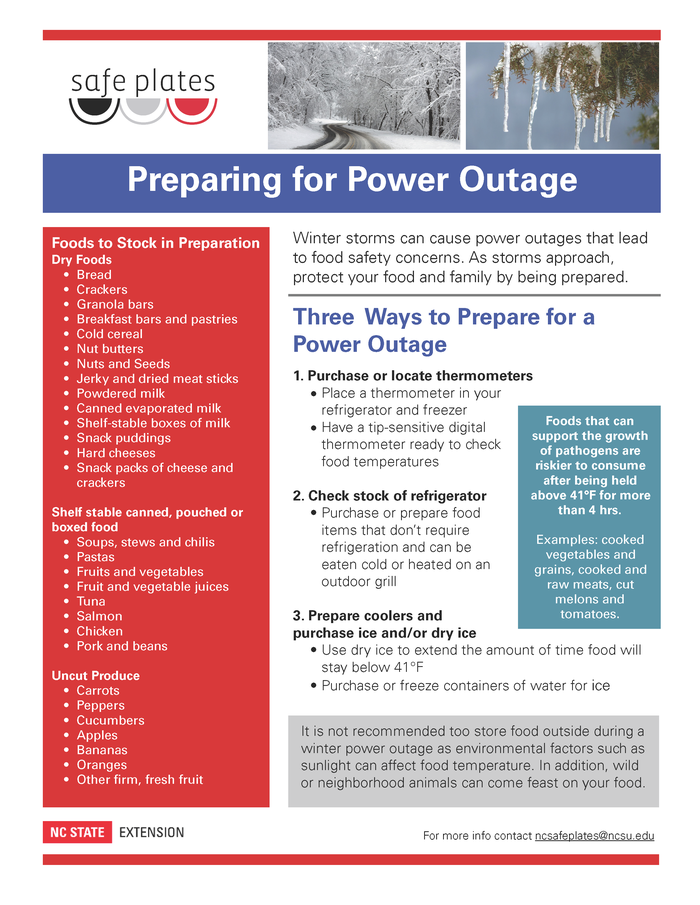
Place a thermometer in your refrigerator and freezer
Have a tip-sensitive digital thermometer ready to check food temperatures
2. Check stock of refrigerator
Purchase or prepare food items that don’t require refrigeration and can be eaten cold or heated on an outdoor grill
3. Prepare coolers and purchase ice and/or dry ice
Use dry ice to extend the amount of time food will stay below 41°F
Purchase or freeze containers of water for ice
Foods that can support the growth of pathogens are riskier to consume after being held above 41°F for more than 4 hrs. Examples: cooked vegetables and grains, cooked and raw meats, cut melons and tomatoes.
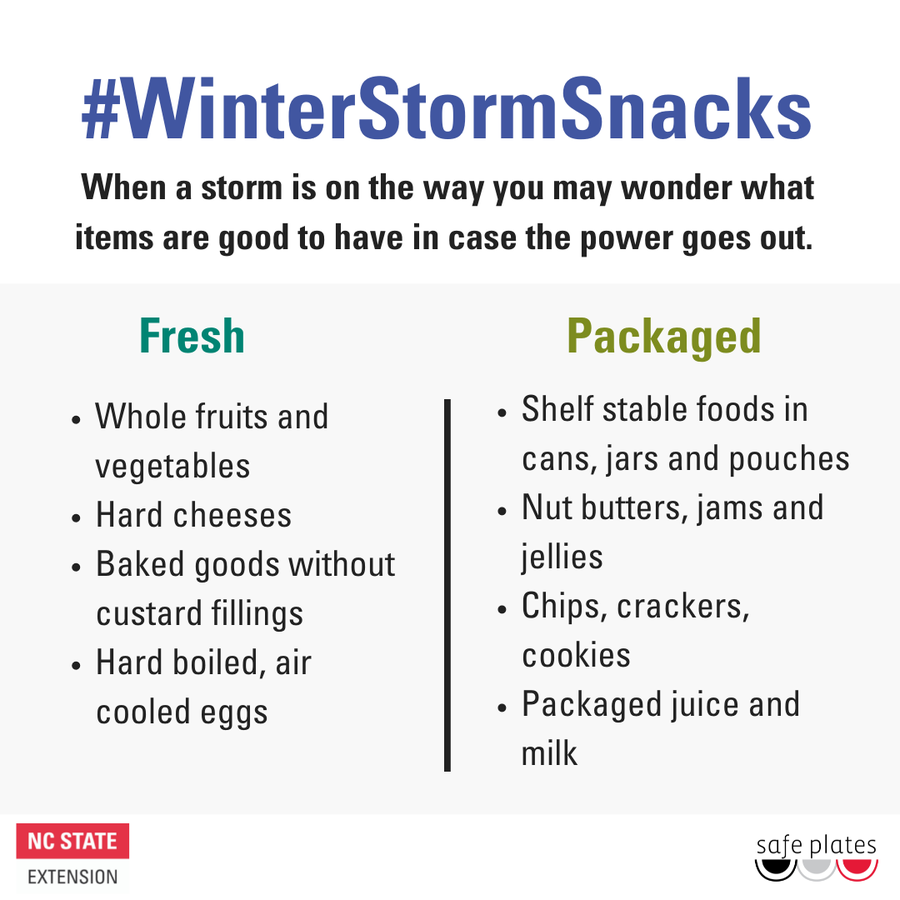
#Winter Storm Snacks When a storm is on the way you may wonder what items are good to have in case the power goes out. Fresh Whole fruits and vegetables Hard cheeses Baked goods without custard fillings Hard boiled, air cooled eggs Packaged Shelf stable foods in cans, jars and pouches Nut butters, jams and jellies Chips, crackers, cookies Packaged juice and milk
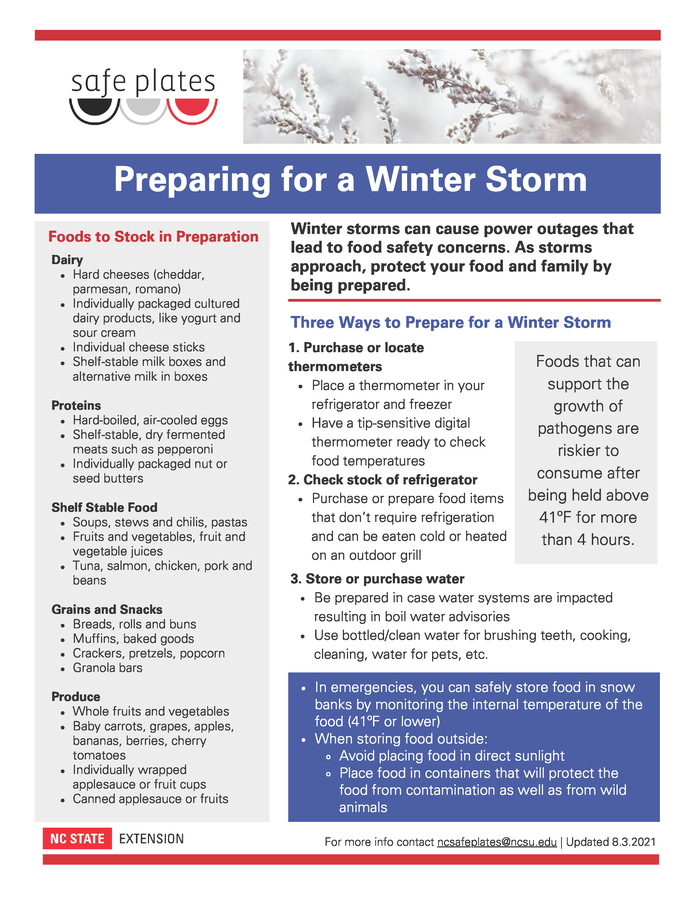
Foods to Stock in Preparation
Dry Foods
Bread
Crackers
Granola bars
Breakfast bars and pastries
Cold cereal
Nut butters
Nuts and Seeds
Jerky and dried meat sticks
Powdered milk
Canned evaporated milk
Shelf-stable boxes of milk
Snack puddings
Hard cheeses
Snack packs of cheese and crackers
Shelf stable canned, pouched or boxed food
Soups, stews and chilis
Pastas
Fruits and vegetables
Fruit and vegetable juices
Tuna
Salmon
Chicken
Pork and beans
Uncut Produce
Carrots
Peppers
Cucumbers
Apples
Bananas
Oranges
Other firm, fresh fruit
It is not recommended to store food outside during a winter power outage as environmental factors such as sunlight can affect food temperature. In addition, wild or neighborhood animals can come feast on your food.