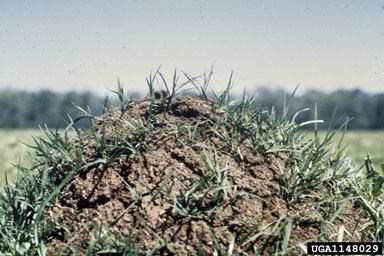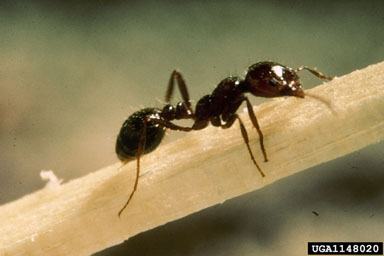
Recently while making a farm visit to a goat producer in the county, the couple began complaining about fire ants. The wife was even bitten by one of the painful ants. NOW is the time of year the ants are most active… spring and fall… and NOW is the time to treat the mound on your property.
In our colder months Imported South American Fire Ants stay below ground. They survive on roots of trees and shrubs they are near, or those of some grasses and weeds. In a matter of months, they will destroy the plants they nest beside if left alone. Fire ants prefer oily foods however, you can test for active ants any time of year with a crumbled potato chip or small piece of any meat (hot dog, luncheon meat, fried chicken skin). Drop these on the mound and see if they come out to feed in a few minutes or many minutes later under cooler weather conditions. You can also determine the presence of active ants with gentle pokes to the mound without causing the mound to move.
You can use bait or contact poison to kill fire ant queens from November through April. Every mound you kill before May will eliminate a colony which would've sent hundreds of winged ants flying skyward after dark on some of the first warm nights of late spring. These would mate in the air and the females would drop to earth and start new colonies underground. These colonies would only become visible after five months. One untreated mound can generate dozens to hundreds of new ones in a single summer season.
In the past, inside our one-room school houses in this area, students of yesteryear were taught that these are "The Borrowin' Days" because winter and spring borrow from each other from Thanksgiving to Mothers' Day. In their silver-haired decades of life, these former students taught me in the 1980's about this interpretation of our climate. After 30 years here, I recognize it's the best way I know to understand our local weather in the fall, winter and spring. We have periods of cold interspersed with unbelievably mild days all winter. Winter really does borrow days from spring from November through May.
When you notice a fire ant mound in our cooler months, visit it again on a warm, sunny, dry day when the day time high temperature is in the sixties or warmer. These days do present themselves all winter here. A few warm days in a row is the best time to go hunting to poison fire ant mounds in winter. The drier and warmer the soil, the better, especially if you are using a bait rather than a contact poison powder. Both of these types of insecticides work to kill a mound for just pennies because active ants carry the small doses of pesticide down deep into the nest and spread it around the whole colony, even to the queen.
Keep your preferred bait or contact poison ready to use before you test the mound with gentle pokes. Don't disturb the mound too drastically, as this will prompt the ants to tunnel away underground to a new location. Mowing off the tops of mounds with lawn mowers, for instance, will often cause ants to move their mound. So will quick splashes of gasoline that cost more than pesticides and kill your plants while they kill a few worker fire ants near the surface, but not the queen, deep in the mound, who lays all the colony's eggs.