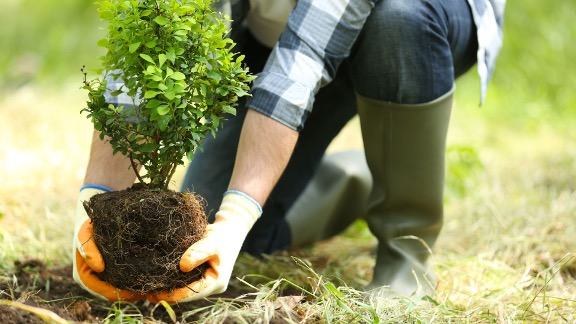
A gardener’s biggest challenge when planting trees and shrubs in this part of North Carolina is the soil. Most often plants suffer from improper soil preparation and planting techniques. A properly planted tree or shrub will be more tolerant of adverse conditions and require less management than one planted improperly. Very often I see trees and shrubs planted in compacted soil with a hole just big enough for the plant’s root-ball to fit in. This sets the plant up for failure immediately. Let’s look at some ways to improve planting techniques and survival rates of plants. When you buy plants, you have a choice of purchasing bare-root, balled-and-burlapped, or containerized plants. Most often containerized plants are the easiest to handle. Containerized plants also have 100% of their roots still attached. However, container plants may be root-bound sometimes. When you buy a root-bound plant, before planting, cut down the sides of the root-ball so new, fibrous roots will grow and spread out as the plant grows. You can also purchase plants that were grown in a bag. Treat them the same way you would a plant in a container.
Bare-root plants tend to be slightly cheaper however you can only plant them when they are completely dormant. Larger bare-root plants usually require staking as well. Larger shrubs and trees are usually harvested as ball-and-burlapped plants from a field. The main disadvantage of B&B material is that 90 to 95 percent of the roots will be severed at harvest time. The best time to dig and replant B&B material is when the transpiration demand is low and root generation potential is high, such as fall, winter, and early spring. Research shows that it takes as long as two months for new roots to be initiated from the callus formed after the root was severed. It can be as long as three months before the regenerated roots absorb moisture outside the root ball. Most studies indicate that the period of reduced vigor following transplanting will last about one year per each inch trunk caliper. It will take a 3-inch caliper transplanted tree three years to regain an original root: shoot ratio.
The size of the plant you buy is your decision. Small plants tend to become established faster and they are more economical. Many consumers, however, want the “instant” landscape look that you get by planting larger plants. Keep in mind that these large trees and shrubs may achieve the instantaneous effect, but post-transplanted stress and costs increase with the size of the tree.
In many areas gardeners will find that the soils are compacted and sometimes poorly drained. In this situation the best thing to do to create a good root-zone is to till the bed as deep as you can and amend the bed with a topsoil: soil conditioner mix. Soil conditioners could include composted pine bark, compost, etc. If you cannot amend the bed and you are planting only one shrub or tree, make sure you dig a wide hole, 2 times the size of the root-ball. If the soil is poorly drained then plant the shrub or tree with ¼ of the root-ball above the ground and mulch. It is better for plants to be raised instead of planted too deep because you can suffocate and drown the roots. The backfill that you use around the plant should be the original soil: “What comes out… goes back in.”