Broccoli is a cruciferous vegetable like kale, cauliflower, and Brussels sprouts. It is rich in vitamins, minerals, and antioxidants. Broccoli is known not only for its taste but for its many health benefits. Broccoli is rich in insoluble fiber and has antimicrobial and anti-inflammatory benefits.
Health benefits of broccoli include:
Lowers Inflammation- Broccoli contains antioxidants, which neutralize cell damage in the body. This helps to lower inflammationand protect against chronic illness. The antioxidants found in broccoli may also lower the risk of certain types of cancer.
Improves Heart Health- Because of its anti-inflammatory effects, broccoli can improve your heart health. The fiber and potassium in broccoli have been found to lower the risk of heart disease by reducing cholesterol and improving cardiovascular function.
Boosts Bone Health- Broccoli is rich in calcium, which is necessary for strong bones. It is also rich in vitamin K, which is needed to help your bones absorb and use calcium.
Aids Digestion- Broccoli is an excellent source of fiber. A fiber-rich diet has been found to promote regularity and prevent constipation. The insoluble fiber in broccoli may also lower the risk of colon cancer.
Regulates Blood Sugar- A fiber-rich diet can reduce blood sugar levels and lower the risk of type 2 diabetes.
One cup of raw broccoli packs: Carbs: 6 grams, Protein: 2.6 grams, Fat: 0.3 grams, Fiber: 2.4 grams, Vitamin C, Vitamin A, Vitamin K, Vitamin B9 (Folate), Potassium, Phosphorus, and Selenium.
Broccoli can be eaten cooked or raw — both are perfectly healthy, but provide different nutrient profiles. Different cooking methods, such as boiling, microwaving, stir-frying, and steaming, alter the vegetable’s nutrient composition, particularly reducing vitamin C, as well as soluble protein and sugar. Steaming appears to have the fewest adverse effects.
Still, raw or cooked, broccoli is an excellent source of vitamin C. Just half a cup of cooked broccoli provides 56% of the DV — more than one-half of an orange can offer.
References: Healthline, VeryWellHealth
North Carolina Harvest of the Month
STEPS TO HEALTH
Health and Learning Success Go Hand-in-Hand
Children who eat school meals are more likely to eat the recommended amount of fruits and vegetables every day than those who do not. Eating the recommended amount every day can help vour child stay healthy and learn better in school. Harvest of the Month helps your family explore, taste, and learn about the importance of eating more fruits and vegetables and being active every day.
Tips for Eating More Fruits and Vegetables
Take your child to the grocery store.
Ask your child to help you pick out fruits and vegetables for meals and snacks
Pack dried fruit or pre-cut fruits or vegetables as a snack.
Adapted from: Everyday Healthy Meals, Network for a Healthy California, 2007.
Home Grown Facts
Broccoli was first grown in Italy and called brocco, which means branch or arm.
The name broccoli is plural and refers to the numerous flower-like shoots that form the head of the plant.
Broccoli is a cool-season crop, closely related to cabbage, cauliflower, kale, and mustard.
In North Carolina, broccoli can be grown in the spring or the fall. In the spring, broccoli grows in the coast plains, piedmont, or mountain regions of NC. While in the fall, broccoli only grows in the coastal plains and piedmont regions of NC.
Because it is very easy to grow, broccoli is one of the most popular garden vegetables. It is also one of the most popular frozen vegetables to eat. The average person in the United States eats nearly six pounds of fresh broccoli per year.
Why Focus on Fruits and Vary My Veggies?
Fruits and vegetables are an important part of an overall healthy, balanced diet.
Fruits and vegetables, like broccoli, are also a source of many vitamins and minerals. Broccoli provides vitamin A, vitamin C. vitamin K. and folate.
Folate is a water-soluble vitamin that helps make healthy red blood cells in your body. It may also help to protect against heart disease.
Eat a variety of fruits and vegetables every day to get the nutrients you need to be healthy.
A good tip to follow is to make half your plate fruits and vegetables to reach your daily needs!
How Much Do I Need?
The amount of fruits and vegetables you need depends on your age, gender, and physical activity level. It is important to eat a variety of colorful fruits and vegetables every day to get all the nutrients your body needs. Find out how much each person in your family needs.
Recommended Daily Amount The amount of fruits of Fruits and Vegetables*
Kids, Ages 5-12
Teens and Adults Ages 13 and up
Males
2½-5 cups per day
4½-6½ cups per day
Females
2½-5 cups per day
3½-5 cups per day
*If you are active, eat the higher number of cups per day. Learn more at the following link.
How Much Broccoli?
A half cup of broccoli is about the size of one cupped handful.
A half cup of cooked broccoli is an excellent source* of vitamin C, vitamin K, and folate. *Excellent sources provide at least 20% Daily Value.
Nutrition Facts
Serving Size: 1 cup fresh broccoli, chopped (44g)
Calories 15
Calories from Fat 0
% Daily Value
Total Fat 0g
0%
Saturated Fat 0g
0%
Trans Fat 0g
Cholesterol 0mg
0%
Sodium 21mg
1%
Total Carbohydrate 3g
1%
Dietary Fiber 1g
4%
Sugars 1g
Protein 1g
Produce Tips
Look for broccoli with a firm stem and tight, compact florets that are dark green.
Store broccoli in an open plastic bag in the refrigerator for up to five days.
Rinse (don't soak) broccoli under cool water just before serving.
Cook broccoli by steaming, microwaving, or stir-frying. Boiling causes some of the vitamins and minerals to be lost.
Frozen broccoli is a healthy and great substitute when fresh is not available.
More Broccoli Each Day
Add chopped broccoli and your choice of vegetables to scrambled eggs. Wrap the eggs in a whole wheat tortilla.
Sprinkle with lowfat cheese for a quick and tasty breakfast burrito.
Top pizza with chopped broccoli before putting it in the oven.
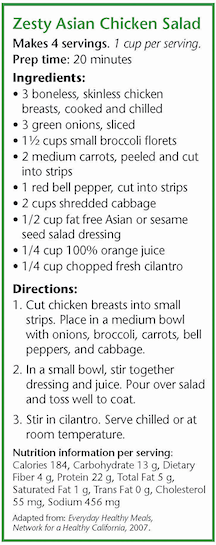
Toss chopped broccoli with chopped cabbage, shredded carrots, sliced bell peppers, chicken, and some sesame dressing for a zesty Asian chicken salad.
ACTIVE ADULTS
Do strengthening activities twice a week. Activities that build strength include lifting weights, doing push-ups and sit-ups, working with resistance bands, or heavy gardening.
For additional FCS information, contact the Franklin County Center office, 919-496-3344, Dominque Simon.