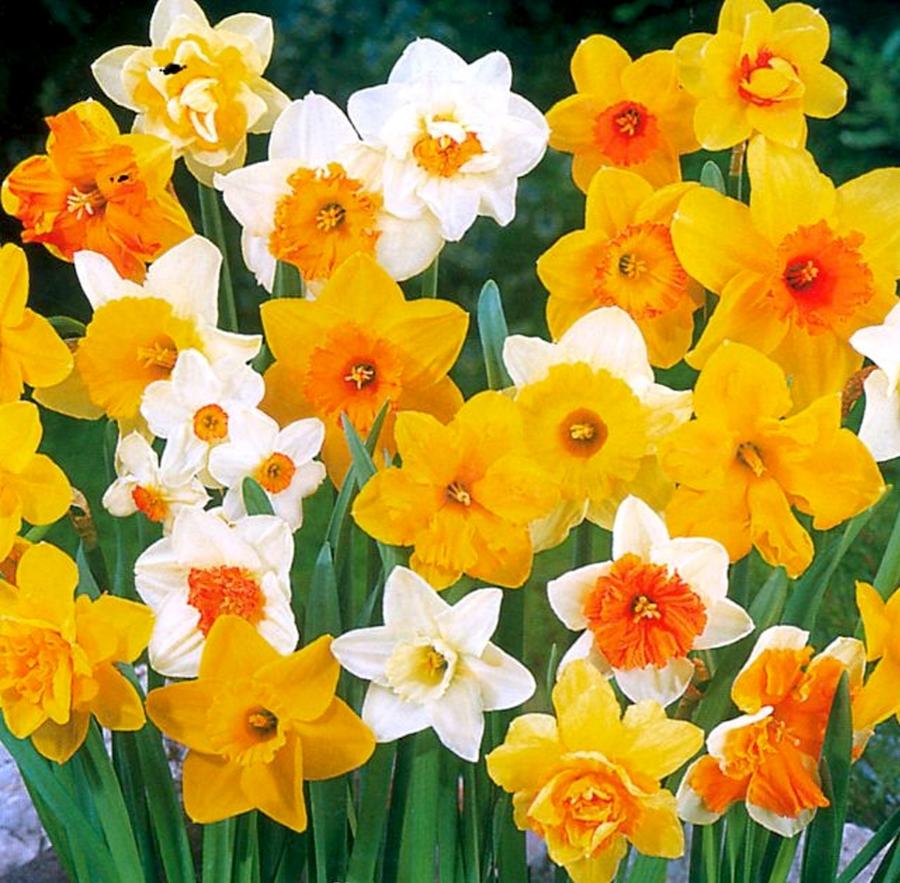
There is a wide range of Narcissus that is grown commercially. The so-called hardy types are generally called “Daffodils” or “Jonquils;” while the tender types are called “Paperwhite” or “ Tazetta” Narcissus. Flower sizes can range from 1-5 inches in diameter, depending on the cultivar. Some cultivars have multi-flowered inflorescences. Flowering periods are cultivar and weather dependent. Therefore, there is Narcissus for almost all garden and landscape uses.
The first thing you need to do before planting bulbs is a soil test. Our soil pH in this area tends to be acidic. If narcissus is grown in acidic soils they tend to display a calcium deficiency. The optimal pH for most bulbs is 5.8 to 6.5. Anything below 5.8 would be considered too acidic. Therefore, lime must be applied according to soil test recommendations. Bulbs should be planted in a well-drained soil as well. If the soil does not drain then the bulbs have a tendency to rot. The cultivar and the size of the bulb determines the depth at which to plant the bulb. Generally small narcissus bulbs are planted 3-4 inches deep. Tulips, for example, are larger bulbs and should be planted 4-5 inches deep.
At planting in late November, the bulbs should be fertilized with a complete fertilizer such as 10-10-10. Then they should be fertilized again when they begin to break the ground in the spring. Four pounds of fertilizer per 100 sq. ft. will be adequate in both the fall and spring for yearly maintenance of the bulbs. Bulb booster can be used at either time if it is available.